





Table of Contents
Gas prices aren’t playing around. If you want SUV space without SUV fuel bills, you’re in the right place.
In 2026, several compact and hybrid SUVs easily hit 30 MPG or more combined — and a few push past 40 MPG. Most of them are hybrids, but a couple of smaller gas models can sneak close depending on drivetrain.
Below is a straight-up, no-fluff breakdown of the best SUVs that get 30 MPG or better in real-world driving.
Quick Comparison Table
| Model | City MPG | Highway MPG | Combined MPG | Drivetrain | Powertrain |
|---|---|---|---|---|---|
| Toyota RAV4 Hybrid | 41 | 38 | 39–40 | FWD / AWD | Hybrid |
| Honda CR-V Hybrid | 43 | 36 | 40 | FWD / AWD | Hybrid |
| Hyundai Tucson Hybrid | 38 | 38 | 38 | AWD | Hybrid |
| Kia Sportage Hybrid | 42 | 44 | 43 | FWD | Hybrid |
| Ford Escape Hybrid | 42 | 36 | 39–40 | FWD / AWD | Hybrid |
| Toyota Corolla Cross Hybrid | 45 | 38 | 42 | AWD | Hybrid |
| Subaru Crosstrek (2.0L) | 27 | 34 | 29–30 | AWD | Gas |
EPA estimates for 2026 model year. Real-world results vary.
Top SUVs That Get 30 MPG
Toyota RAV4 Hybrid MPG
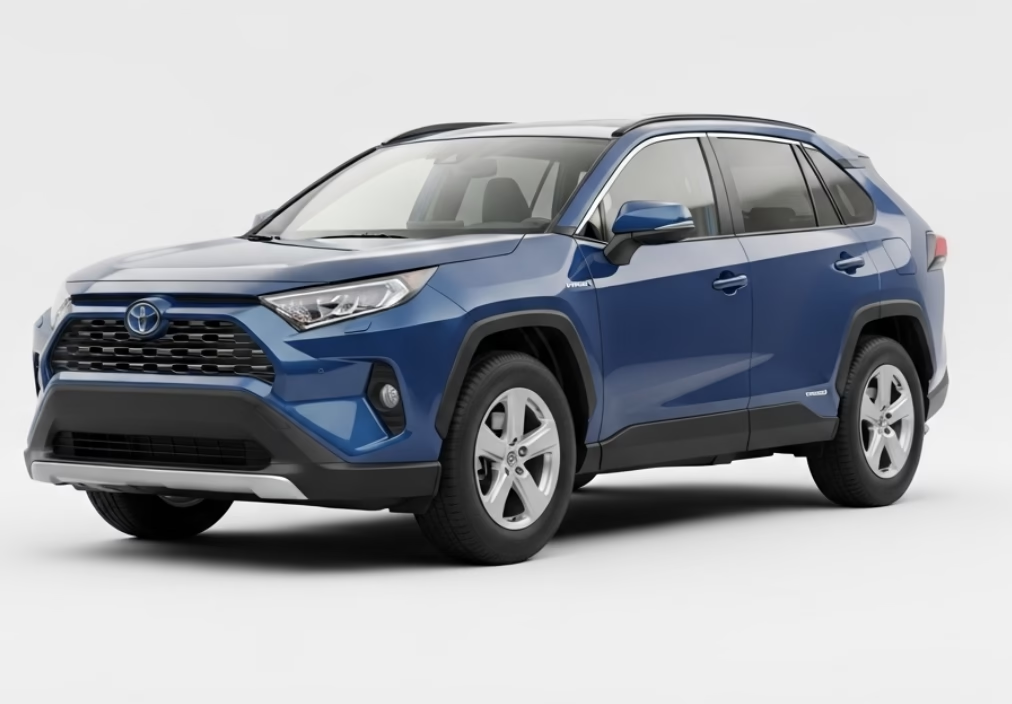
The RAV4 Hybrid is basically the gold standard.
- 41 city / 38 highway
- Around 39–40 MPG combined
- Available AWD without a huge MPG hit
Real-world drivers regularly report 38–42 MPG if they drive smooth and don’t hammer the throttle.
If you want something roomy but still easy on gas, this one’s hard to beat.
Honda CR-V Hybrid MPG

Honda stepped it up.
- 43 city / 36 highway
- 40 MPG combined
It shines in city driving thanks to its electric assist system. In stop-and-go traffic, it sips fuel.
Highway MPG is slightly lower than RAV4 Hybrid, but still solid.
Kia Sportage Hybrid MPG
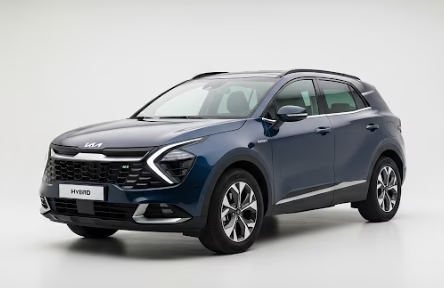
This one surprises people.
- 42 city / 44 highway
- 43 MPG combined (FWD model)
That 44 highway number is legit impressive for an SUV.
If you drive long highway commutes, this is a sleeper pick.
Hyundai Tucson Hybrid MPG
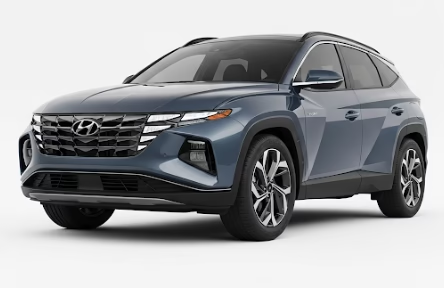
- 38 city / 38 highway
- 38 MPG combined
Balanced and consistent. Not the highest MPG in the group, but very steady across city and highway.
Standard AWD is a plus.
Ford Escape Hybrid MPG
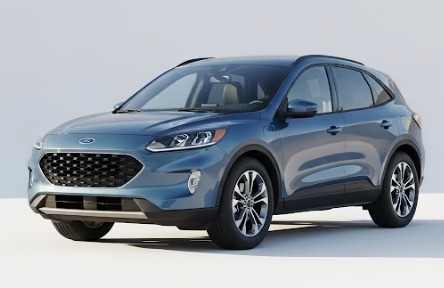
- 42 city / 36 highway
- 39–40 MPG combined
Very efficient in city traffic. It doesn’t get enough hype, but it’s one of the most affordable hybrid SUVs on the list.
Toyota Corolla Cross Hybrid MPG
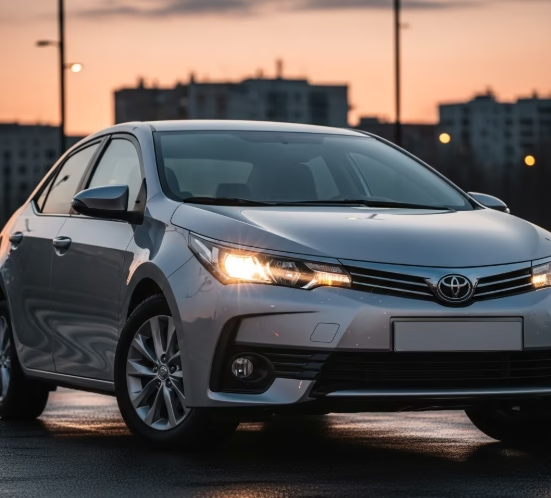
If you don’t need a huge SUV:
- 45 city / 38 highway
- 42 MPG combined
This thing is basically Prius efficiency in SUV form.
Smaller size = lighter weight = better MPG.
Can a Gas SUV Get 30 MPG?
Short answer:
Rarely.
Most traditional gas-powered SUVs land between 24–29 MPG combined.
Smaller AWD SUVs like the Subaru Crosstrek can touch 30 MPG highway, but combined MPG usually stays just under.
If 30 MPG is your target, hybrid is the move.
Why Hybrids Dominate the 30 MPG Club
Here’s the deal:
Hybrid SUVs use:
- Electric motors for low-speed driving
- Regenerative braking
- Smaller, efficient engines
That combo crushes city fuel consumption.
Gas-only SUVs have to rely fully on combustion — and that burns more fuel, especially in traffic.
Real-World MPG vs EPA Ratings
EPA numbers are tested in controlled conditions.
Real-world MPG depends on:
- Driving style (heavy foot = worse MPG)
- Speed (70+ mph hurts fuel economy)
- Cold weather
- Tire pressure
- AWD vs FWD
Most hybrid SUV owners report being within 2–3 MPG of EPA estimates, sometimes better in city driving.
Is 30 MPG Good for an SUV?
Absolutely.
For perspective:
- Full-size SUVs: 15–22 MPG
- Standard gas compact SUVs: 24–28 MPG
- Hybrid compact SUVs: 38–43 MPG
So yes — 30 MPG in an SUV is solid.
But if you want max savings, aim for 38+ MPG hybrids.
Who Should Buy a 30 MPG SUV?
A 30+ MPG SUV makes sense if you:
- Commute daily
- Drive 12,000+ miles per year
- Do road trips
- Want space without crazy fuel bills
- Live in high gas price states
You’ll save hundreds per year compared to a 22 MPG SUV.
Why 30+ MPG Is Impressive for SUVs in 2025–2026
For most traditional gas-powered SUVs, fuel economy typically ranges between 22 and 26 MPG combined. Reaching 30 MPG or more is a significant efficiency milestone, especially for vehicles that offer higher ride height, cargo space, and all-wheel drive options.
In 2025 and 2026, the majority of SUVs exceeding 30 MPG combined use hybrid powertrains. These systems combine a gasoline engine with an electric motor to improve efficiency in city driving and stop-and-go traffic. Regenerative braking also helps capture energy that would otherwise be lost.
For buyers who drive long distances daily, the difference between 25 MPG and 40 MPG can translate into substantial fuel savings over time.
Real-World Fuel Cost Comparison (100 Miles Per Day Example)
To understand the real impact of fuel efficiency, consider this example:
Assume:
- Fuel price: $3.50 per gallon
- Driving distance: 100 miles per day
Fuel cost comparison:
- 40 MPG SUV → $8.75 per 100 miles
- 35 MPG SUV → $10.00 per 100 miles
- 30 MPG SUV → $11.67 per 100 miles
Over one year (36,500 miles):
- 40 MPG → ~$3,193
- 30 MPG → ~$4,258
That’s a difference of more than $1,000 per year in fuel costs.
Higher MPG SUVs significantly reduce long-term ownership expenses.
Why Most 30+ MPG SUVs Are Hybrids
Nearly all SUVs that achieve over 30 MPG combined rely on hybrid technology.
Hybrid systems improve efficiency by:
- Using electric power at low speeds
- Assisting the gasoline engine during acceleration
- Shutting off the engine at idle
- Recovering braking energy
Gas-only SUVs rarely reach 30 MPG combined, particularly in AWD configurations.
If fuel economy is your top priority, hybrid compact SUVs remain the most efficient segment in 2025 and 2026.
Estimated Driving Range Advantage
Another benefit of high-MPG SUVs is extended driving range.
For example:
- A 40 MPG SUV with a 14.5-gallon tank can travel nearly 580 miles on a full tank.
- A 30 MPG SUV with the same tank size will travel about 435 miles.
Fewer fuel stops can be especially valuable for commuters and long-distance drivers.
Why 30 MPG Is a Big Deal for SUVs in 2026
For most traditional gas-powered SUVs, combined fuel economy typically falls between 22 and 26 MPG. That means reaching 30 MPG or more is a major efficiency milestone for this vehicle category.
SUVs are heavier, taller, and less aerodynamic than sedans. So when an SUV crosses the 30 MPG threshold, it usually indicates advanced fuel-saving technology — most commonly a hybrid system.
The difference may seem small on paper, but over thousands of miles, that extra efficiency translates into meaningful long-term fuel savings.
Fuel Cost Comparison (100 Miles Per Day Example)
To understand how MPG affects your wallet, consider this example:
Assume:
- Fuel price: $3.50 per gallon
- Driving distance: 100 miles per day
Fuel cost per 100 miles:
- 40 MPG SUV → $8.75
- 35 MPG SUV → $10.00
- 30 MPG SUV → $11.67
Now multiply that over a year (about 36,500 miles):
- 40 MPG → ~$3,193 per year
- 30 MPG → ~$4,258 per year
That’s over $1,000 in annual fuel savings just from choosing a higher-MPG SUV.
For daily commuters and long-distance drivers, the impact is significant.
Why Most 30+ MPG SUVs Are Hybrids
Nearly all SUVs that achieve over 30 MPG combined rely on hybrid technology.
Hybrid systems improve efficiency through:
- Regenerative braking, which recovers energy when slowing down
- Electric motor assistance during acceleration
- Engine shut-off at idle in traffic
- Improved efficiency in stop-and-go city driving
Gas-only SUVs rarely exceed 30 MPG combined, especially when equipped with all-wheel drive. Hybrids dominate this segment because they reduce fuel consumption where SUVs typically use the most fuel — in urban conditions.
Estimated Driving Range Advantage
Higher fuel economy also means fewer fuel stops.
For example:
| SUV | Fuel Tank | Estimated Range |
|---|---|---|
| Toyota RAV4 Hybrid | 14.5 gallons | ~580 miles |
| Honda CR-V Hybrid | 14 gallons | ~560 miles |
A 30 MPG SUV with the same tank size would travel closer to 430–450 miles per tank.
Frequently Asked Questions
What SUV gets the best MPG in 2026?
The Toyota Corolla Cross Hybrid and Kia Sportage Hybrid are among the top performers, reaching 42–43 MPG combined.
Are hybrid SUVs worth it?
If you drive regularly, yes. Fuel savings over 3–5 years often offset the higher purchase price.
Do AWD SUVs get worse MPG?
Usually 1–2 MPG lower than FWD versions, but hybrid AWD systems minimize the difference.
Can a 3-row SUV get 30 MPG?
Very few. Most 3-row SUVs stay below 30 MPG combined. Hybrid 3-row models usually land in the mid-30s at best.