



The Toyota Prius is one of the most fuel-efficient hybrid cars ever made, but highway speed has a huge impact on real-world MPG.
Many Prius owners notice:
- excellent fuel economy around 55 MPH
- a noticeable MPG drop at 75 MPH
Even with the Prius’ aerodynamic design, higher speeds still increase fuel consumption significantly.
Quick MPG Comparison
| Speed | Average Prius MPG | Efficiency Level |
|---|---|---|
| 45 MPH | 58–65 MPG | Excellent |
| 55 MPH | 52–60 MPG | Best Efficiency |
| 65 MPH | 47–54 MPG | Very Good |
| 75 MPH | 38–46 MPG | Reduced Efficiency |
| 85 MPH | 32–40 MPG | High Fuel Usage |
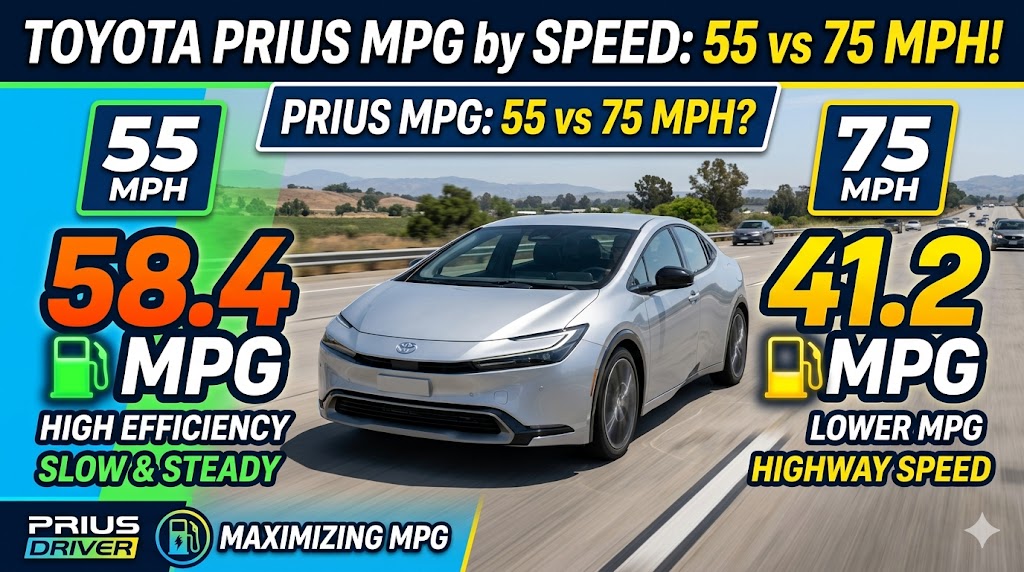
55 MPH vs 75 MPH Comparison
| Category | 55 MPH | 75 MPH |
|---|---|---|
| Typical MPG | 55–60 MPG | 40–45 MPG |
| Fuel Consumption | Lower | Much Higher |
| Engine Load | Lower | Higher |
| Cabin Noise | Quiet | Louder |
| Hybrid Efficiency | Better | Reduced |
| Long Highway Trips | More Efficient | Less Efficient |
Driving 75 MPH can increase fuel usage by 30–40% compared to 55 MPH.
Why MPG Drops at Higher Speeds
The biggest reason is simple:
Higher speeds create more air resistance.
At 75 MPH:
- the engine works harder
- fuel burns faster
- the hybrid system becomes less efficient
This causes a noticeable reduction in overall MPG.
Real Highway Fuel Cost Difference
Assuming:
- 500 km highway trip
- Petrol around ₹100/L
| Speed | Estimated Fuel Used | Approx Fuel Cost |
|---|---|---|
| 55 MPH | 18–19 liters | Lower |
| 75 MPH | 25–27 liters | Much Higher |
Even though faster driving may save some travel time, fuel costs increase substantially.
Best Speed for Prius Fuel Economy
Most Prius owners report the best balance between:
- fuel economy
- comfort
- engine efficiency
at speeds between 50–65 MPH.
| Driving Situation | Recommended Speed |
|---|---|
| City Driving | 25–45 MPH |
| Best Highway MPG | 50–60 MPH |
| Balanced Highway Driving | 60–68 MPH |
| Aggressive Highway Driving | 75+ MPH |
Factors That Affect Prius Highway MPG
Tire Pressure
Low tire pressure increases rolling resistance and reduces MPG.
Proper tire pressure helps:
- improve fuel economy
- increase tire life
- improve stability
Wind Conditions
Strong headwinds can reduce highway MPG dramatically.
At higher speeds, wind resistance becomes much more noticeable.
Extra Weight
Heavy luggage or passengers reduce overall efficiency.
Air Conditioning Usage
Heavy AC usage slightly increases fuel consumption, especially during long highway drives.
Driving Style
Smooth acceleration and gentle braking help maximize Prius efficiency.
Aggressive driving reduces MPG quickly.
Can a Prius Still Get 50 MPG at 75 MPH?
Yes — but only under ideal conditions:
- flat roads
- warm weather
- proper tire pressure
- light cargo
- minimal wind resistance
Most drivers realistically see:
| Speed | Realistic MPG |
|---|---|
| 55 MPH | 55–60 MPG |
| 75 MPH | 40–46 MPG |
Tips to Improve Prius Highway MPG
Drive Slightly Slower
Reducing highway speed from 75 MPH to 65 MPH can noticeably improve fuel economy.
Accelerate Smoothly
Avoid hard acceleration whenever possible.
Maintain Tires Properly
Correct tire pressure helps improve both mileage and handling.
Remove Unnecessary Weight
Less weight means better efficiency.
Use Cruise Control on Flat Roads
Cruise control helps maintain steady and fuel-efficient speeds.
Final Thoughts
The Toyota Prius delivers excellent fuel economy, but highway speed plays a major role in real-world MPG.
Key Takeaways
| Speed | MPG Result |
|---|---|
| 55 MPH | Excellent fuel economy |
| 75 MPH | Noticeable MPG reduction |
Check more Prius Blogs : Toyota Prius MPG by Year